Summer

What is it about summer that captivates the human spirit? The essence of summer seems to hold an ineffable allure. For me, summer represents freedom from the oppressive weight of winter garments and the luxury of extended, idle days spent in the rooms of air conditioning.

Many summers ago, I once wrote: “The most vivid memory is of us racing down that empty street on a summer night, my feet in sandals, glancing back to see if he was catching up.”

Now, as I revisit that sentence, the street, the race, even my own self from that time—none of it comes to mind. I’ve always prided myself on having a good memory, but today, that once cherished moment has transformed into an echoless void. It’s made me realize that memory operates in ways beyond my control. The disparity between the tangible words on the page and the void in my mind is speaking in a poignant irony.

Was there something intrinsically special about that summer? As I pondered, I found myself shaking my head: “In truth, all the summers blur into one another.” Perhaps that summer was unique, yet in retrospect, it blends seamlessly into the continuum of summers past. As adulthood settled in, summer became synonymous with picnics on grassy fields and the gentle haze of sunlit tipsiness— always chasing after something ineffable, yet somehow stumbling through the years in a daze.

Not too long ago, I wrote: “This summer is different, very different, probably the most memorable of all.” It felt as though I had finally grasped the fleeting essence of eternity and the profound juxtaposition of the ephemeral and the eternal. It was the sudden realization of both “this is it” and “this is just it.” Despite the words I wrote down, I sensed the inescapable destiny—just another summer.

I once believed that writing could immortalize experiences. But when my mind fails to revive those cherished memories, how does what’s written differ from a mere fairy tale? My deep sorrow isn’t about the events themselves, but the realization that even the most significant moments eventually fade into mundane anecdotes shared over dinner. Or worse, they vanish entirely from memory, forgotten by everyone, including the one who lived them.

So, what is summer? It has transcended being just a season; it has become an evocative image, a cornerstone of aesthetic contemplation. The mention of summer conjures vivid scenes that encapsulate its essence. Perhaps after an exceptional summer, each successive one strives to recapture the spirit of that defining moment.

As temperatures reach their peak and then gradually descend, so does the fervor of summer. Whether it symbolizes sun-drenched beaches or the vibrant pulse of life, no matter how diligently I attempt to etch every memorable moment into my mind or bestow them with special significance on paper, in the end, people disperse, leaving nothing behind and taking nothing with them.

Summer and eternity have never been nouns to describe the concept of time, but rather, measures of magnitude.


Side note: memory is highly based on repetition. The reason why I forgot that particular event was probably due to a lack of repetition. Therefore, I guess it wasn’t that significant after all. Sad, but also not sad. The nature of forgetting is very sad, but once it’s forgotten, there’s no subject for the sadness to direct towards.

Or could be that my memory ain’t that strong.

You might say: “That’s why we have cameras nowadays!” They work the same as words. They capture facts, not the moment itself.

“That’s why we need to live in the present!” Yeah, I agree.

(I’m so done with editing lol whatever it seems alright so im handing it in as my monthly writing hw)

June 2024

I finally woke up from a very long dream, at least, I think I did.

Outside the window, the cicadas’ chirping drew me away, transporting me back a year. Back then, I harbored a question deep within: “Will I recall this moment in the future? When warmth embraces me again, the breeze caresses my face, and cicadas’ song fills the air?” I sensed that soon, these vivid details would blur into a single, distant memory. Countless thoughts and uncertainties would eventually untangle, condensing into a fleeting feeling while the rest faded into oblivion.

I engage in a dialogue with my past self. I assure her, “At least now, a year later, you remember. And those thoughts? You were right. Everything you envisioned has happened, the highs and the crushing lows alike. We couldn’t embrace each other then, but now, I can honestly say, it’s all fallen into place, just as you feared and hoped.”

Last summer, I circled my fears endlessly, afraid to face them yet yearning to understand them. I dreaded forgetting and being forgotten, haunted by a persistent cloud that neither rained nor allowed sunlight through. What I feared then did come to pass. Perhaps it was a self-fulfilling prophecy, or maybe I truly understood what lay ahead.

As I sit there, zoning out, suddenly I mutter to myself, “Ah, shit.” These memories have blurred, now condensed into a single, poignant point, anchored at my twenty-two-year-old self. Standing at my current twenty-three-year-old vantage point, I can’t fathom why it condensed to a mere point, despite my desperate resistance. I begin frantically searching for any physical evidence that my memories have actually happened.

Time is finally out of my control, despite my inner turmoil. New memories flood in, forcing the old ones to be rearranged to make room. Sorting these tales feels like organizing books on a shelf, displacing the old to accommodate the new. Sometimes, flipping through those dusty old narratives feels both achingly familiar and painfully foreign. Regardless of their beauty, the swirling dust prompts me to hastily close them after a few pages, returning them to their place. It could be impatience or resignation to the relentless accumulation of time’s dust.

Echoes from a year ago ripple through time and space to find me, leaving me both bewildered and hollow. It seems my past self had foreseen this moment, anticipating my reaction now. She wrote: “You might be judging a lot right now, thinking how young and dumb I was, struggling to process all the memories and information. But I am really, really sad and scared. My rational mind still works, so don’t worry.” She feared judgment from her future self; she was terrified of her own emotions, using rationality as a shield to feel better. In the end, I’m not judging, but my heart aches for that vulnerable self.

Reflecting on this now, I feel a sense of relief in finally confronting the questions that once plagued me, yet a profound melancholy remains—an ache for my past self, and for each fleeting story that burst like a firework and vanished. I know my tendencies; I often lose things unknowingly, realizing too late. Each time I grow fond of something, alongside joy comes the inevitable sorrow of its unknown departure. Whether it’s losing an object or losing the part of myself in affection for it, the sadness of loss is ever-present. As time progresses, regardless of what’s lost, I continue losing things, piece by piece.

Loss, ultimately, is a constant state, but the path to it is excruciating. As I stand at this new juncture, I understand that memories, like cicadas’ songs, will fade. Yet, their echoes shape who I am, with the threads of joy and sorrow, reminding me that every moment, even those lost, contributes to my life. The melancholy of loss lingers, a hauntingly beautiful shadow that walks with me, whispering of the transient nature of all things.


In simple words at the end of the article: No matter how deeply I delve into them, the themes of time passing and loss always circle back to stories and ourselves, with their essence unchanged from the very beginning.

People are strange—they love stories with sad or open endings but secretly wish for happy ones. Honestly, they all have their own appeal. They are just stories, in the end.

random questions w/o an answer

TLWR: as the title.

I don’t get why human nature is so weird. Is the version of ourselves during the day the same as the one at night? They both think, but in totally different ways. The daytime version seems all logical and cool, while the nighttime one is all about emotions and grudges. So, which one’s the real deal?

They say, “Don’t make decisions at night because that’s when you’re most emotional.” And honestly, we all tend to stick to that rule because nobody likes dealing with the messy aftermath of emotional decisions.

Do we still rely on intuition these days?

——————–

Self exploration is kind of bullshit. To truly discover who we are, we often have to let go of a ton of baggage and break free from the molds we’ve been crafting since day one. But here’s the kicker: in the process of shedding all that stuff, we might not feel like ourselves anymore, right? I attempted a thought experiment where I imagined not knowing anything I currently know, and then I tried to make a decision. The outcome? I was stuck. I couldn’t take any action without relying on information or experiences I’ve picked up from the world around me, whether consciously or subconsciously.

——————–

Reading with a specific purpose or mindset can be both helpful and problematic. On one hand, it can guide your understanding and focus your attention. But on the other hand, it might cause you to distort the meaning of the text to fit that purpose or mindset, similar to how you might treat an encyclopedia or dictionary.

There’s also a difference between thinking as yourself and thinking based on someone else’s perspective. However, if you don’t engage in some level of thinking while reading, it’s like not really reading at all. And without exposure to other people’s perspectives, it’s hard to develop a solid framework for evaluating and forming your own opinions.

——————–

I tend to be pretty cynical. Older folks say it’ll pass, that it’s just because I’m still young. Guess I’ll have to wait and see if that’s true. Maybe one day I’ll be less cynical—or at least learn to show it less—because that’s what real adults do, right?

——————–

Do we genuinely accept things as they are, or do we simply pretend to accept them to ease our minds? Even if certain values are considered normal or trendy, if we can’t truly accept them, do we ever really accept them in the end, or are we just deceiving ourselves to fit in? Not gonna lie, we are pretty good at self deception, at least I am.

——————–

Been wondering what happiness is. People often say that those of us in our 20s should work hard now to secure a happy future. But if we don’t understand what happiness truly entails, will it really just come to us magically down the line? Do we find happiness through hard work, or do we learn to work hard because we’re already happy?

Despite all these questions, I still put in the work. I mean, I’m not about to gamble my next ten years away. I don’t have the courage for that, survival comes first. But yeah, the world is confusing.

——————–

One thing I learned after 23 years is, just fucking do. It’s pretty stupid in my eyes. But I follow that rule too. Honestly, I hate the rule as much as I hate feeling powerless as a person. It’s not that I dislike myself, it’s just frustrating to feel so powerless sometimes.

——————–

What exactly is power? Maybe I’ll figure it out once I have some. But once I do get there, I find myself wanting other types of power that I don’t currently possess. So, what is it that I actually want? Maybe I just crave anything that I don’t have—curiosity or greed, perhaps?

——————–

Going through a heartbreak, and I still am. It’s raised a ton of questions:

  1. Why am I feeling so down?
  2. How is this sadness different from other sadness?
  3. What am I really longing for?
  4. What exactly am I afraid of?
  5. Why do we all seem to react in similar ways after a breakup, yet also have such different responses?

——————–

I don’t really sweat the solo scene. Sure, we all popped out solo-style, but deep down, we’re wired to seek connection, right? Even so, I’m like a mystery even to myself sometimes. Sharing bits of me with others? It’s like a game of telephone – what I say might not match what you hear, and vice versa. Misunderstandings are just part of the human experience, I guess.

——————–

Language is handy for sure, but it’s got its limitations. It’s like trying to nail Jell-O to a wall sometimes. Metaphors help, but they’re like filters that can distort the truth a bit as we try to express ourselves.

What’s the truth? The more we try to pin it down with words, the more it wiggles out of our grasp. It’s frustrating, like trying to catch a breeze in a net. We’re itching to wrap our heads around it, but it’s like it’s playing hide-and-seek – either it’s not there, or we’re just not getting the whole picture.

——————–

We’re all chasing happiness, no doubt about it. But sometimes, they say to brush off those rough patches without really knowing why they’re there. We just know they suck because they don’t feel good.

It’s like that old saying, “If it’s not nice, it’s not right.” But without digging into what’s causing the funk, we’re stuck with these generic self-help tips like “just do it, you’ll feel better.”

But what happens when similar situations pop up again? We’re left scrambling to use methods we barely grasp to shield ourselves from stuff we don’t even understand, all in the name of chasing that feel-good vibe.

——————–

Got a ton of opinions swirling around and questions that seem to have no answers. After mulling them over forever, I usually just shrug and say, “Well, that’s life.” Can’t figure it all out, so might as well roll with the punches and keep on living.

——————–

I tend to ask a lot of questions, and yeah, some of them might seem pretty dumb in hindsight. Those are the ones that can be done with some internet search.

But the ones that don’t have a clear-cut answer, especially the ones that dive into the gray area of opinions and possibilities, are the most time-consuming.

Will I look back on these questions someday and think they were totally dumb? Hard to say. I mean, I still can’t crack the ones I was puzzling over ten years ago, so it’s not just a matter of time making them seem silly. It’s more about how much I’ve grown and learned since then. Reality might not change the questions themselves, but it sure changes how I deal with them – whether I just toss out a “whatever” answer or dive in until my brain feels like mush.

——————–

They say “don’t overshare your inner thoughts,” but where’s the line? I mean, if our minds are a free-for-all, when does sharing cross into oversharing territory?

——————–

What’s important and what’s not? The thing is, the importance of stuff tends to shift like sand under your feet. What I consider crucial today might not even register on my radar a couple of months down the line.

Adulthood

TLWR: revisited The Little Prince. Turning 23 in a few days, so, it’s a bday post.

When I was 13, a decade ago, I first picked up this book. At first, “The Little Prince” didn’t seem too exciting to me with its title and being labeled as “children’s literature.” But I decided to see what all the fuss was about. To me, it was just a tale about a boy and some strange creatures and plants.

Back then, it was just another book that I tucked away in my memories as okay, not amazing, but decent. I used to think the best books were the ones that made me cry, and since I rarely cry over literature, those were the ones I considered top-tier. The next level down were the books that held my attention for a long time. For instance, “A Song of Ice and Fire” took me a long time to finish. I remember thinking while reading it, “Great stories, but my parents definitely won’t approve, so I’m reading it (sort of rebelliously).” Basically, I judged books solely on their plots, without thinking too much into deeper meanings.

This year has been particularly challenging for me, prompting me to revisit “The Little Prince” as a way to reconnect with its fundamentals. Among its many themes, the one that resonated with me the most was the exploration of adulthood.

Long time ago, I often found myself pondering why all adults seemed to adhere to a similar pattern: they wore serious expressions daily and repeated the same routines without any apparent boredom. I once asked my dad why these adults didn’t opt for a life of adventure, choosing to travel the world instead of commuting on the subway to work five days a week. His response was simple: “They just can’t.” I was puzzled by this explanation.

Even at the age of 22, I struggled to comprehend the essence of adulthood. As I began contemplating the realities of life and the passing of time, I realized that I was gradually transforming into that very type of unexciting adult.

“Act your age,” they all advised. Consequently, I started concealing my daydreams, reserving a space for thoughts deemed inappropriate for my age. I increasingly engaged in adult responsibilities, despite lacking a full understanding of their significance. I suppressed the silly questions in my mind, aware that more mature individuals would likely ridicule them and urge me to adopt a more realistic mindset.

Becoming an adult entails a balance between reality and fantasy. Fantasies used to hold a greater sway over my life, allowing me to live carefree days filled with daydreams. However, as I matured, reality gradually encroached upon my reveries. I found myself swinging back and forth between the demands of reality and the allure of my fantasy world, feeling somewhat lost in the process.

People frequently reassure me, saying, “You’re still too young; you’ll understand eventually.” Whenever my impractical daydreams surface, I’m compelled to suppress them with a more rational mode of thinking. Despite my efforts to conform to adult norms and behaviors, my mindset remains largely unchanged from the moment I first posed the question, “Why are adults like this?”

As we mature, the luxury of exploring our inner child often slips away. Each passing year brings a burden of knowledge, layering complexity onto what once seemed simple and beautiful. Everyday objects like cars and houses lose their whimsical charm, replaced by calculations of worth and utility. We prioritize tangible benefits, overlooking the intrinsic value of experiences and the joy of simply appreciating life’s wonders. Our pursuit of immediate gains consumes us, leaving little room for gratitude or reflection.

In our relentless quest for certainty and measurable outcomes, we may project an image of bravery. Yet beneath this, lies a deep-seated fear of embracing our own immaturity. Are we truly becoming more mature, or are we simply too afraid to acknowledge the richness of remaining childlike in a world that demands adult responsibility?

Am I truly embodying rational adulthood in my twenties, or am I merely conforming to societal expectations? Each time I find myself needing to conform to the prescribed norms of adulthood, I experience a visceral discomfort. The act of indoctrinating myself with the “correct” adult perspectives feels like a form of mental coercion. Despite feeling a resistance in my very being, I ultimately give in to the pressure to adopt the more mature, rational, and socially accepted behaviors and beliefs.

The child within me still jumps around with excitement, hoping to see her dreams come true. In her eyes, nothing is impossible, even if the odds are slim. Most of time, they are not coming true, she would start crying over these stupid adult rules: “Why can’t we?” Yet, time and again, I always end up breaking her heart and telling her: “Sorry, but we can’t do that, we just can’t.” Now, she sometimes retreats into her own little space, living with her unrealistic daydreams, aware that I’ll always reject them.

“They just can’t,” I finally understand what my dad meant all those years ago. Am I any different? I guess not. This year, I’ve had to let go of so many things, not because they weren’t important enough, but simply because “I just can’t.”

Well, I’m turning 23 in a few days. I hate growing up, but it’s inevitable. I’ll keep carrying the weight of adult responsibilities, hoping the little me doesn’t get too disappointed in the reality.

It was a fantastic year regardless. I’m grateful for everyone who supported me and for everything I experienced. Without all of you, I wouldn’t be who I am today. So, thank you for being here. (and thanks to chatgpt for the language support lol.) Until the next time :))

Love,

Lin

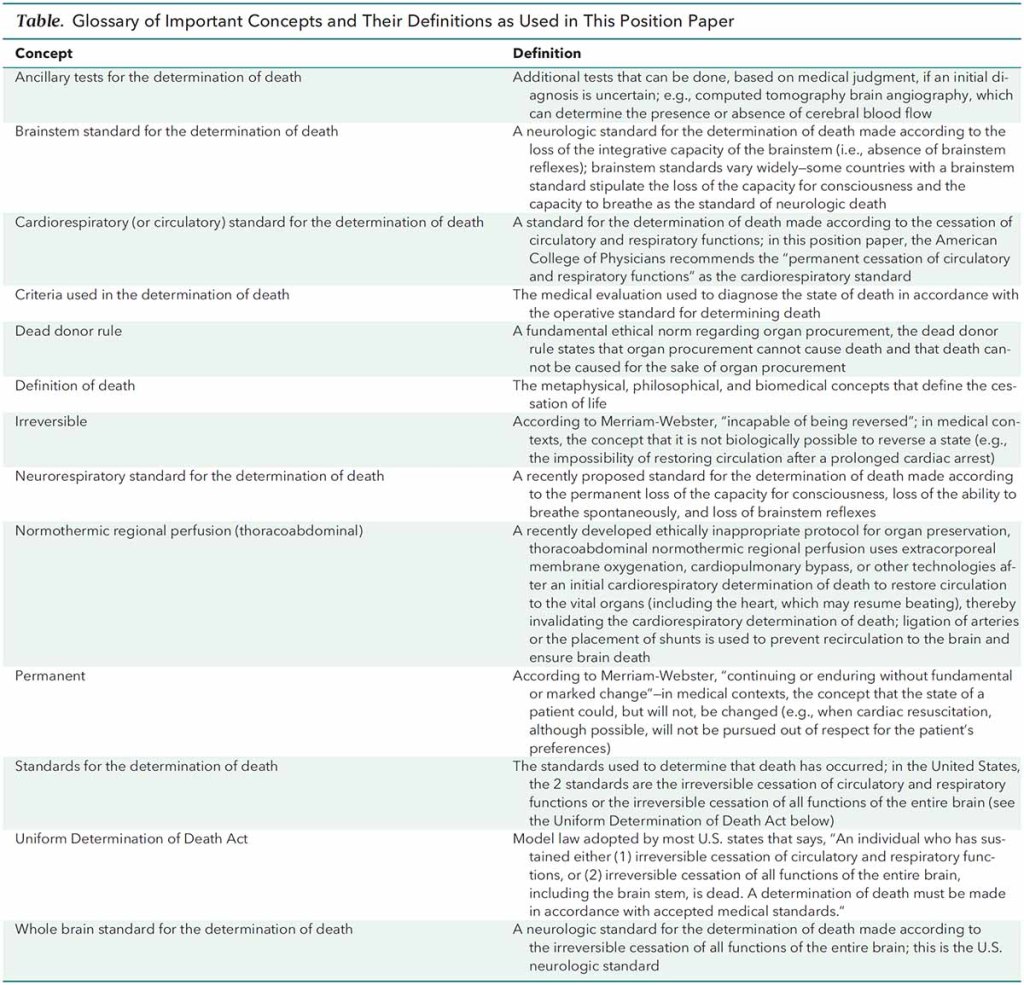
a casual march talk about death

TW & TLWR: talked about death, which might trigger some people’s anxiety. read with caution and don’t take words too seriously. stop reading if you feel uncomfortable. a very incoherent piece of bs that’s gonna take you 5 minutes to read at a speed of 300 words per min.

General flowchart: an okay intro → stuff i saw online → personal identity and psychology → ethics of death → a random summary and a few extra points

Today, i’m diving into something swirling around my head, though I’m not exactly sure what it is. This writing might come out a bit jumbled because my thoughts are all over the place.

Lately, I’ve been thinking a lot about death, not in a gloomy way or anything. I did some googling on the topic, and I have to admit, reading and watching stuff about it made my heart race for a bit. I guess that’s what they call an existential crisis. One thing every human eventually faces is death. It’s like this big mystery nobody really knows about. I asked some friends my age about what they think about death, if it scares them or why. Turns out, a lot of them fear not being able to see the future or being forgotten.

Back in the day, I used to complain about how long life seemed, assuming I’d live till 80. I felt stuck in this never-ending routine, even though I was barely 10 and didn’t know much. But now, bam, I’m already in my twenties, and life doesn’t seem that long anymore. Still though, I hate monotonous life like sisyphus rolling his stone. Yeah, I get it, I have to accept it, it’s just annoying.

I can’t help but wonder what the point of it all is. It’s one of those questions everyone asks themselves at some point, but you never really get a satisfying answer. Out of curiosity, I looked up people’s near-death experiences and what it feels like to be in a coma. Obviously, those aren’t real death, but it gave me a glimpse of what it might be like. Personally, I once blacked out for a few hours after a bike accident (probably had a mild concussion). It was just like others described: a rush of adrenaline followed by nothingness. No pain, no memories, just blank. I guess it’s that emptiness that freaks people out the most.

There’s a ton of stuff connected to death, but I’m only gonna talk about a small part: identity, psychology, and ethics.

You can’t talk about death without talking about life and why we’re here. When you really dig into it, you end up with stuff like existentialism, nihilism, absurdism, and some religious stuff (important but too broad, so I’m skipping it). I’ve bounced around between these different ways of thinking, but right now, I’m kinda sitting between existentialism and absurdism: life is absurd but still gotta create some meaning to it. What does it mean to live? Well, it’s everything from meeting your basic needs to finding your purpose. Why do we live? Probably ’cause we have to, but also ’cause we wanna chase that dopamine hit however we can. To really live your best life, you gotta figure out who you are.

Someone once asked me to define what makes a person, what sets them apart from everyone else. I’ve had this dumb theory since I was a kid: a person is just a mix of possibilities from all the possibilities out there. We’re shaped by all sorts of factors, some of which we control and others we don’t. So basically, we’re a mix of genetics and experiences, all rolled up into one. Sure, we’re all unique in our own way, but when you really think about it, there’s always gonna be someone out there who’s kinda like you.

Then there’s the whole question of whether we stay the same person over time. People change all the time, but can you really change someone else? There are these two extremes: the body theory, which says it’s all about your physical self, and the soul theory, which talks about some unexplainable soul thing (i don’t believe in it but i don’t hate the idea). Everything else such as brains, personalities, and memories lay somewhere in between. I won’t go into details about how each works, my conclusion is they all contribute a little into a personal identity – we change and we don’t change depending on the situation.

Consider this: Imagine someone undergoes a significant shift in personality due to a traumatic brain injury or another life-altering event. Are they still the same person they were before? If not, does that mean the person they used to be has essentially “died” Perhaps we can accept minor changes as a natural part of life, but where do we draw the line? At what point do these changes make someone unrecognizable to their own family? And how much can we trust our own perceptions of who someone truly is?

It’s pretty obvious that what really matters to us as a person lies somewhere around the brain area. One question I love asking myself is: how do you know if you are you, not someone else? Let’s take an extremely specific scenario:

Person X and Person Y were close friends despite their differing beliefs. One fateful day, they were kidnapped by a mad scientist who had a bizarre experiment in mind. This scientist somehow managed to swap X’s thinking and reasoning skills with those of Y. Although X retained all of his memories and personality traits, he found himself thinking like his best friend Y, even on matters they used to disagree on. X pondered over this strange turn of events, attributing it to their close bond.

As the experiment continued, the scientist proceeded to strip away one aspect of X’s personality and memory each day, replacing it with Y’s. Eventually, X’s body contained all of Y’s information, and vice versa. Despite this complete exchange of traits, X and Y were still considered alive, albeit swapped, without any physical brain replacement occurring.

However, the scientist decided to take things further by discarding all of X’s memories and personality traits, along with Y’s body, into a junk machine. Only Y’s memories and personality remained within X’s body. In this scenario, it could be argued that X had effectively “died,” as his essence was replaced entirely by Y’s.

Now, onto the ethical stuff about death. We’re talking about things like abortion, the death penalty, suicide, euthanasia, all that heavy stuff. Morality is all about figuring out what’s right and wrong, but most of the time, there’s no clear answer. The ethics of death involve things like when we say someone’s dead, who gets to decide when someone dies, and how death affects everyone around them.

The reason it’s so hard to agree on this stuff is because everyone’s different, and death is kinda final. When someone dies, it doesn’t just affect them, it affects everyone around them too. Take, for example, a person fell into a deteriorating locked-in state (they couldn’t move or speak at all, but had consciousness), and they wanted to keep living but couldn’t express their desire. The doctor told their family all the possible treatments and outcomes, one of them included minimal treatment and extubation. Then, the family decided to go with minimal treatment. In this scenario, everyone played a role in the death decision process except the person themself. There are many other scenarios that are frequently debated in deciding who gets to do what and where the line should be drawn to mark life and death. (Well, Elon Musk’s chip might change this scenario, but you get what I mean here.)

My head is hurting, so imma wrap it up here.

It’s kinda wild to me how we can all have such different opinions but still agree on some basic stuff. We all go through life forming our own identities, but when it comes down to it, we’re all searching for meaning in one way or another. Then, when we encounter either real or fake scenarios that are linked to life and death, we react in similar ways: curiosity, fear, anxiety, grief, helplessness, etc.

Life’s gonna throw some curveballs our way, like physical decay and loneliness, but that’s just part of the ride. Maybe things will change in the future with all this fancy technology, but one thing that won’t change is that humans are born alone. Don’t dwell on it too much, just enjoy the ride. Just a few weeks ago, I was unsure about the whole concept of building a family, but now I get why it’s a thing.

So yeah, life and death might seem pointless in the end, but the journey’s where it’s at. And who knows, maybe I’ll find my own way to happiness instead of following our ancestor’s old path. But hey, marriage and kids might still be in the cards for me ’cause I love doing human stuff. (actually, 98.99% of chance i will be following our ancestors lol)

Also, there might be a way to achieve immortality one day, but I’m not sure if that’s gonna be a good thing. Plus, I’m probably not going to see it happening in my lifetime → none of my business. But anti-aging and other science researches are very cool. (lol not me going an extra mile to be as neutral as possible)

Thanks for listening to my ted talk today. Catch you next time, and remember to find joy in living.

Love,

Lin

tmi but kinda good to know:

https://www.acpjournals.org/doi/10.7326/M23-1361

love from a 22-year-old

TLWR: Explored what love is for a bit, and concluded that it’s complicated. The writing is all over the place, so it’s not going to be an easy read 😬 (Even AI told me to improve my structure coherence to make it more reader-friendly, oh well… LOL.)

What is love? Is it specific or general? What makes people fall in and out of love? Is it arranged through a specific combination of events? Does it precede actions, or are actions the catalyst for its emergence? Consider the unique bond between a mother and child – does love evolve before or during and after pregnancy, and why are there exceptions where a mother may not love her child? Furthermore, if an individual develops love for someone after a period of time and specific conditions, is it conceivable that the same combination of circumstances with a third individual would yield a similar affection?

I made several attempts to tackle this topic, facing the challenges due to its complexity. Despite feeling a bit inadequate in terms of knowledge, I decide to take a shot at writing about love, especially with Valentine’s Day coming up soon. While my discussion predominantly revolves around human-to-human love, it’s worth noting that many of these reflections can be extended to encompass the human-non-human connections, be it an affection for a pet or a fervor for a hobby.

To dig a bit deeper into what love is, the English concept of “love” can be understood to some extent through the lens of the Greek terms—erosphilia, and agape. (skip the gray box if don’t need the background info and credits to IEP and SEP.)

The Platonic idea of eros revolves around the pursuit of ideal beauty. It suggests that the concept of beauty can be universally applied to various entities, such as individuals, objects, concepts, and art. In this context, love is about embracing the Platonic form of beauty itself rather than focusing on a specific person. Plato’s perspective doesn’t necessitate mutual feelings, as the emphasis lies on the pursuit of the inherent ideal beauty in the object, rather than seeking companionship or shared values with another individual.

In contrast to the passionate desire of erosphilia entails having a liking and appreciation for the other person. According to Aristotle, philia can be motivated either for the sake of the person expressing love or for the sake of the other person. The reasons for this distinction can include forming a friendship for utility, appreciating the other person’s character and values (with the understanding that changes may affect the friendship), or simply loving the other person for who they are, irrespective of personal interests. Aristotle’s idea of philia aligns somewhat with the concept of friendship, emphasizing acts of kindness, doing them without being asked, and not boasting about them as things that foster friendship.

Agape represents a kind of love involving God’s affection for humanity and vice versa, including a brotherly love for everyone. It incorporates elements from both eros and philia, aiming for a perfect love that is affectionate, transcends specific individuals, and is passionate without expecting reciprocal love. Loving God means being completely devoted, similar to Plato’s love for Beauty. This kind of love involves passionate feelings, awe, and a desire that goes beyond worldly concerns. Aquinas, inspired by Aristotle, sees God as the most rational being, deserving our love, respect, and thoughts.

To sum it up, love encompasses various forms beyond the three mentioned. The ongoing debates about the superiority of one form over another are not a path I choose to tread, recognizing the subjective nature of this emotion.

Definition and nature of love

Distinguishing love from other personal attitudes, such as liking, poses a question that often involves considering factors like constancy and commitment. While these criteria offer valuable insights, it remains a challenge to categorize every case neatly within a singular set of standards. Consider this illustration: an individual may find themselves entwined in a perpetual and committed relationship, yet the essence of love remains absent from their experience. Conversely, the inverse holds true as well — one might encounter the fleeting and transient embrace of love, escaping its grasp as swiftly as it arrived.

Many assert that love inherently embodies selflessness and empathy, yet uncovering the relationship between love and these attitudes is crucial. The key lies in discerning the direction of selflessness and empathy within the context of love. Take empathy, for instance; its manifestation can vary significantly between the one expressing it and the recipient. The perceptual differences between individuals can lead to diverse understandings of love. What one perceives as an act of love may be interpreted differently by another. Furthermore, attempting to standardize these attitudes from an observer’s perspective becomes nearly impossible. While someone may declare their empathy based on commonly accepted standards, true empathy is inherently personal to the giver. Similarly, defining selflessness proves elusive and is subject to individual interpretation. One can claim their selflessness while being perceived as an act of selfishness by another individual. The critical question arises: are selflessness and empathy sufficient for the creation of love? Can love still exist in the absence of these two components? This complexity challenges the notion of a one-size-fits-all definition of love, encouraging a more diverse exploration.

Love is comparable to a double-edged sword, embodying a duality. On one side of this emotional spectrum lie the realms of happiness, excitement, and contentment — positive emotions that elevate the human experience. These emotions create a heightened expectation, an anticipation that love, in its various forms, will bring about a perpetual state of joy and fulfillment. These expectations are intertwined with positive experiences, whether acquired through real-world interactions or mediated representations in various forms of media. However, on the flip side, when these expectations encounter the stark reality of unmet desires or the unfortunate loss of a loved entity, love transforms into a source of profound sadness, disappointment, and grief. The dissonance between the idealized expectation and the often imperfect reality gives love its paradoxical nature, where its potential for joy is entwined with the possibility of heartbreak. This dual nature underscores the sensitivity of love to external circumstances, emphasizing its vulnerability to the fulfillment or denial of expectations, thereby shaping the positive or negative emotional outcomes.

Like many other feelings, rather than existing as a static and unchanging emotion, love reveals itself as a dynamic force that intricately weaves through the human existence in various cyclical patterns. One prominent manifestation is observed in familial love, an intergenerational transmission of affection that forms a continuous cycle within families. Moreover, individuals may cultivate a profound sense of self-affection as a response to the perceived lack or insufficiency of it. This self-love, however, is not immune to the intrusion of doubts, which may emerge as individuals grapple with internal conflicts or insecurities. These doubts, acting as subtle disruptors, contribute to a gradual weakening of the positive feelings associated with self-love. The cyclic nature of love, depicted through familial and self-oriented contexts, underscores its adaptability and responsiveness to the ever-changing circumstances of life. Love’s ability to evolve and transform based on experiences emphasizes its profound impact on human emotions, as individuals navigate the interplay of fulfillment and deprivation in the realms of affection and self-regard.

The question of whether love is innate or shaped involves an examination of emotional responses and individual perceptions. Love’s complexity becomes evident as it is not universally defined, with individuals varying in their emotional reactions to specific stimuli. The subjective nature of love is further emphasized by the role of perception and interpretation. While certain emotional responses may have biological roots, the reciprocal aspect of love, often fostered by the belief in mutual affection, introduces a relational dimension. Another external scenario involves the recipient’s role in shaping the process of love. A notable example is in developmental studies that explore how the parent-child relationship influences a child’s future capacity to maintain relationships. This interplay between innate predispositions and external influences highlights the uniquely evolving nature of love in each individual’s life journey.

In contemporary society, the pursuit of love reflects an inherent longing for emotional connection. The dynamics of falling in and out of love are influenced by various factors: 1) the fulfillment of fundamental needs such as reproduction and intimacy, and 2) the pursuit of higher needs like companionship and self-fulfillment. Notably, when these needs go unmet, the likelihood of falling out of love increases, emphasizing the relationship between individual expectations and the multifaceted nature of love, as previously noted. Is falling out of love equivalent to being selfish? Maybe a little. It’s like a defense mechanism provided by our mind and body to protect us from further dissatisfaction or pain, which isn’t a bad thing under some situations (not including immoral behaviors here). Morality is another super topic that I’m scared to step into, so I will skip it for now. While the reasons for experiencing love seem apparent, the underlying causes of establishing loving relationships remain somewhat elusive. It could be rooted in a biological imperative for increased security, or it may represent a psychological yearning, transcending physical love and embodying a more profound form of emotional connection.

Finally, the question arises: is love a universal experience? There is no one particular definition works for every case. But in terms of the feeling itself, I argue in favor of its universality, much like many other human emotions. Despite the environmental influences and innate factors, the essence of love remains constant. It may manifest differently from person to person or in relation to various subjects, yet its core essence remains unaltered. This mirrors the universality of suffering; though categorized into different forms and degrees, subjectively, the pain an individual feels from losing a cherished teddy bear can equate to the anguish of losing a loved one. Hence, the elusive nature of love defies measurement or strict definition, allowing each person to experience a unique type of love that may not be universally acknowledged.

Let me succinctly summarize the key points in this messy passage. Love exhibits a dual nature, yielding both happiness and sadness, a duality rooted in our expectations, which are shaped by environmental influences, whether actively or passively acquired. Moreover, love operates in a cyclical manner, displaying both conservative and fluid dynamics, influenced by both innate interpretations and external factors. Finally, the universal craving for love, driven by both biological and psychological factors, hinges on various elements, including the fulfillment of needs, shifts in personal perception, and the dynamic nature of love itself.

At the very end, I can hardly conclude or answer anything. In essence, the questions about love prompt an exploration of the dynamics at play, urging me to move beyond rigid classifications and embrace the fluidity inherent in the human emotions. It beckons me to appreciate the uniqueness of each expression of love, acknowledging the diverse ways individuals perceive and experience this profound emotion.

Anyway, I’m simply an observer and a pattern-finder, trying to make conclusions based on some social phenomena and personal experiences, aaand maybe a tiny bit of research. After this long-ass not-so-bs passage, I’m just going to click submit and rest for another month LOL. Thank y’all for stopping by and making it this far to the end. Happy Valentine’s!

Love,

Lin <33

a goodbye to 2023

The dawn of 2024 has arrived. Time for some reflection. (Though I do it all the time LOL.)

Keywords of 2023: love, mental health, self-growth, and goodbyes.

I held high expectations at the close of 2022, completely unaware of the challenges that awaited, little did I know…

I tumbled out of love, grappled with anxiety and insecurities, and lost trust in myself. I constructed a self-imposed prison, trapping myself in constant guilt and rage, making the tail of 2022 the darkest period of my time.

I questioned the essence of love repeatedly, constantly seeking validation and pondering the authenticity of my feelings as potential alternatives to my insecurities.

I dove into a phase of distraction, engaging in endless swiping and enduring boring small talks to numb myself. Love lost its appeal, and I sought validation as a lifeline to ease the pain of my self-created prison.

I got into medical school, achieving the seeming “dream,” that became the straw I clung to for escaping the literal prison of my own making. I was resolute, yet apprehensive about the unknown future. Little did I anticipate the consequences of the decision I would make four months later.

I fell in love unexpectedly, blurring boundaries in a relationship that defied existing definitions—a unique interactionism within the contemporary dating landscape. Once more ensnared, I found myself lost in contemplation, unraveling the mysteries that lie beneath the surface of love.

I experienced the highest highs and the lowest lows, feeling the adrenaline rush of the golden hour and confronting extreme sadness amid the hustle between the outer world and the devastation within.

I bid farewell to the most difficult goodbyes, the kind that lingered in my thoughts for months — seven years of my life, the people and things I held dear, and a significant part of who I was.

I faced doubts stemming from life transitions and heartbreaks, struggling to recognize myself. I embarked on a long journey of finding myself, navigating through challenging days and nights as a walking hollow vessel—emotions passing through without leaving a mark.

I forged a deep connection with the outer world, learning the essence of self and the right way to love others and myself. I discovered the importance of keeping passion alive in today’s mundane world, emerging as a new and better version of myself after an extremely difficult process.

In 2023, I shed more tears, laughed harder, became more vulnerable, and loved more deeply than ever before. It was a year of adventures, a mix of gentleness and madness, love and heartbreaks, pushing me toward a higher plane of existence. As someone who used to struggle with goodbyes, I learned to bid farewell with courage.

At the beginning of 2024, I say goodbye to 2023, grateful for the lessons and the shaping it provided. Thank you, 2023, for taking care of me. (TBF, it was a nasty year LOL.)

I guess I do live for loving and being loved for a little bit more.

thought-mix

too long won’t read: i feel like an imposter in different areas; idk why i’m writing at all but i’m still doing it cuz i like it; self-love is confusing cuz of the blurry line to selfishness. lastly, lots of appreciation to people who have been there for/with me this year, and happy holidays to everyone.

hey friends,

it’s been like a month now – how have y’all been doing? let’s catch up. the thrill of the weekly post ended quite shortly, as expected before i even started the whole thing. (at this point, i can’t distinguish if it was a self-fulfilling prophecy or just laziness anymore.)

life is full of ups and downs, and unfortunately, for the last few weeks, i found myself situated in the downs. i allowed myself to take a break from my own thoughts, living a relatively repetitive life that gave me some sort of energy. it’s a paradox to me; in order to think, i need to break out from repetitiveness. but the breakout costs much more than the action itself – it’s like a self-interrogation.

as i sit here and write sh*t down at this moment, in the back of my mind, i’m thinking about the Anki cards i need to go through today. i’ve kinda lost the ability to prioritize my tasks. recently, whenever i wanted to write, i shook the idea off by putting it off and off until i couldn’t remember the thought anymore. and THAT is bad.

there have been some thoughts that have been stuck with me for some time, which haven’t been forgotten (thank god) before i stare at the blank page, trying to dig something out of the grooves of my brain. now it’s time to share – or more like a thought dump LOL.


every time i write, i’d warn myself not to overshare. however, i find the definition of oversharing unclear. to some, it’s exposing even the tiniest bit of themselves, while to others, it’s not telling strangers their home address. i fall somewhere in between. if i discover something is too personal, i simply take it down and learn from the mistake. yeah, i learn my lessons the hard way.

1. an imposter?

a. i often observe the pervasive use of the term “imposter” in my generation. but of course i’m no sociological expert, i can’t make any definite conclusion of this phenomenon. nonetheless, the universal embrace of the “imposter syndrome” includes me and a bunch of others.

b. academically, i consider myself semi-intelligent – smart but average. in conversations with myself, i struggle with the nature of success, questioning whether luck played a grater role than merit. the paradox of acknowledging failure while feeling like an imposter in success becomes a constant companion in my journey.

c. within the sphere of intimacy, my internal dialogue resonates with self-criticism – “not pretty enough,” “bad temper,” “incapable of love.” these thoughts possibly rooted in insecurities or low self-esteem, but i put it within the framework of imposter syndrome. understanding my own virtues becomes a struggle, perpetually entangled in the search of self-worth.

d. emotional encounters become another quandary as i interrogate the authenticity of my feelings. questions like “am i pretending my emotions?” permeate my introspective moments. despite feeling the emotions, the nagging skepticism precedes my expression, turning each emotional act into a potential imposture.

e. during the recent hiatus, i used the challenges faced by others during finals and my own struggles created by the external sources as rationales for my absence. yet, this introspection morphed into self-gaslighting, a subtle attempt to excuse my lapse. the internal debate of realism vs. self-indulgence unfolds, revealing some ethical complexities of personal responsibility and external circumstances.

f. i recognize myself in the paradoxical identity of a “lazy overachiever” as i mentioned in the last post – a consistent and solid mental framework that turns positivity into negativity. this curious form of self-motivation through self-sabotage is my psychological network. achievements, from writing to weekly gym sessions, lose their sheen if not accompanied by a burnout, reflecting the restless within.

g. i certainly don’t have a quick fix to this problem, or thought, or issue. what i can do is to construct a more substantial illusion of a cognitive masterpiece to convince myself that i am not an imposter. this whole thing becomes a pursuit of existential authenticity, where the fractured self seeks reconciliation with an idealized, albeit illusory, sense of genuine being.

2. what’s writing to ME?

a. i wonder what makes a writer or thinker “good.” if i express myself without aiming to connect with readers, am i a bad writer? yet, writing solely for views feels fraudulent. the middle ground is crafting ideas in a way the public can understand. but then, is it all just entertainment with the writer as a medium for info transmission?

b. i enjoy writing and thinking, but what’s the point? do i want to be heard? am i searching for the “truth?” the answer to the former: sure, but it’s not the top priority. then why have a blog if being heard isn’t crucial? the answer to the latter: there’s no absolute truth. then what am i doing here? (man, i receive almost no feedback anyway, and i’m sitting here, worrying about if i’m being heard LOL.)

c. to be heard, i must create something entertaining. yet, i resist writing solely for entertainment. my rebellion is writing for its own sake – maybe another excuse for my limitations or a form of self-sabotage.

d. i feel stupid when writing, encountering walls of unknown knowledge. delving deeper could take years, and self-sabotage clouds my mind, even on straightforward topics like DNA replication. (how can i be SURE if i don’t read every single article about the topic?)

e. i admit that i’m not adept in either language. my chinese and english fall short, hindering proper self-expression. learning the language seems a solution, but it’s a delay tactic. so, i use plain words, creating a chaotic portrayal of my mind.

f. after points a to e, i concluded that writing matters to me. i cast aside standards and expectations, writing unseen. yet, i acknowledge responsibility to avoid unintentional harm with my words. for example, i’m pretty sure that my all lowercase is going to make some people go “ughh”, apologies first, but that’s who i am and how i construct my last post of 2023.

g. in our peculiar era, every action faces inner or external resistance. as an old saying goes: “don’t be a p*ssy; choose and commit.” balancing personal conviction and consideration for others becomes the challenge in this strange landscape we inhabit.

3. what is self-love?

a. as the year ends and i approach 23 (still 4 months away fyi), i’m still trying to figure out the connection between love and self-love. following the last point from the previous section, i’m pondering where the line between self-love and selfishness lies.

b. recently, a thought-provoking video (don’t remember which) emphasized the significance of focusing on our own needs and desire instead of dedicating all our time and energy to serving others.

c. memories are like threads weaving our personal stories. life is short, and only a few significant moments stick with us. these moments replay in our minds like fleeting clips. living solely for oneself or loving oneself seems paradoxical. to do so, we navigate societal structures, social roles, material pursuits, and consumerism – parameters that dictate our survival and well-being.

d. pursuing “living for oneself” involves conforming to social norms and structures. we play roles and participate in societal life, raising questions about the feasibility of exclusively living for oneself.

e. in reality, we are connected to the world around us, shaped by collective history and societal frameworks. our lives involve moments of engaging with and contributing to others’ well-being. balancing individual fulfillment and societal contribution forms our existence. 

f. apologies for the rambling. my point is, self-love is a social construct. we can’t truly love ourselves without interacting with others. learning to love ourselves happens through loving others and receiving love from the world. (IMO!!)

g. love is a complicated subject, and i may revisit it next year. it’s a deep topic, and not everyone can make it this far reading through my nonsense anyway LOL.

h. how does this thought connect to the previous two? firstly, these topics have been extensively discussed throughout history, with MANY experts in these fields. this abundance of existing discussion has hindered me form writing about them for a LONG time. secondly, delving into these unknown questions triggers the paradoxical imposter syndrome. the feelings of stupidity and lack of knowledge merge into a mountain of frustration. so, here we are, navigating the complexities of thought and self-expression. i really want to make another point, but my brain is deep fried at this point already, so that pretty much sums it up.


at the end of this post and the end of 2023, i want to thank everyone who has been with me, as well as the tons of others who have either actively or passively impacted me. it has been a wild year for me personally, but whose isn’t while they are still in their early 20s? i’m grateful for everyone i’ve encountered this year. thank you all for showing up in my life and creating some of the most precious pieces of my own self. during this holiday season, i wish you all the best and happy holidays🎄love yourself a bit more in the upcoming year, and may everything be smooth for you!

lots of love with some extraaa love than usual,

lin

p.s. if you really make it sooo far to this point, i apologize for the structure and logic of my writing. it will get better.
a lazy overachiver

hi friends! as finals season approaches, i’ve taken a moment to reflect on my past tendencies to place excessive demands on myself. wishing each of you tremendous success in your upcoming finals and graduate applications for the Class of 2024. best of luck!


“It seems like you ask for a lot from yourself,” my friend said. When she inquired about my feelings regarding my consistent gym attendance over the years, I nonchalantly shrugged and replied, “I’m proud, but it’s not something to overly boast about. Deep down, I’m always unimpressed by myself, thinking, ‘you could’ve done better.'”

Caught up in the current era’s hustle culture, I found myself competing not only with others but against my own will. Yet, today, I’ve come to realize that I lost a part of myself along the way. Despite being inherently lazy and having modest expectations, I somehow transformed into one of those high achievers in our materialistic world.

Competition was never my cup of tea. While other kids my age fought for candies, I would stand there patiently, waiting for the chaos to subside. In crowded situations like boarding buses or metros, I preferred lingering behind, content to be the last one. Even on my swimming team, where everyone raced for the first place, I found satisfaction in claiming the last spot. It took me a decade to truly grasp the meaning of competition.

The question lingers: Is my ambition an authentic part of me, aka is it an biological instinct, or did it stem from external influences? This internal conflict becomes another layer of my struggle—a clash between a deeply ingrained high self-standard and a natural inclination toward laziness.

As I reflect on the changes I’ve undergone over the years, something doesn’t quite align with who I used to be. A once laid-back individual, I find myself becoming increasingly unimpressed with my own achievements, always striving to instill more discipline to enhance myself.

This inner desire for improvement seems fueled by the pressures of the modern environment. It parallels the pursuit of various goals, where the allure of accomplishments sometimes appears hollow and lacking true substance.

The friend introduced grounding techniques to tether me to reality, a realm I frequently find daunting. “Live in the present and embrace life instead of dwelling on the past or worrying about the future,” she advised. My reply echoed a persistent struggle, “I just don’t know how to. I look at one thing, I either see its past or its future; the present only flashes by and then it becomes the past.”

My worries about the future constantly feed into my lazy-ass ambition. “I need to do this… I need to do that… I need this degree in order to get that degree…”

Still not sure about the desires towards high achievements, but cynicism has always been a part of my nature. While kids my age reveled in play and laughter, my thoughts were occupied with concerns about my impending 40-year-old adulthood. My grasp of nature and reality instilled in me a sense of hopelessness, as the idealism seemed unattainable.

In response, I forged my own system, one diverging from the accepted norms of the mainstream world, resulting in a contradiction self – an anxious procrastinator, an indecisive determinative person, and a lazy overachiever.


the last 3 paragraphs were so shit, but it’s time to post. thank you for stopping by!

lots of love,

lin

Trade

i woke up at 5AM this morning, done with my morning ritual – mostly caffeine (not great for my anxiety but lol) and journaling, and thought to myself: why not post this week’s post early so i can get it out of my way. so here it goes:

In the silent shadows where desires unfold,
I wanted to wear another's story, bold.

Each sunrise whispers tales of a distant 'they,'
A phantom image of perfection that leads astray.

Until one day, a twist in fate's grand chore,
My identity became the one they wished for.

Becoming one of them, dancing at every dawn and twilight,
Being wanted by them, basking in the skin from a borrowed light.

For when a soul wished to trade its core,
In that moment, I became one, wanting more.

not the first time writing a poem, but i’m still quite new to it. with limited vocabulary and literacy, i will try my best. i really can’t produce something long and meaningful every week (it’s lowkey getting shorter and shorter lol), but i’m still posting every week hehe. how am i doing recently? a lot better. i’m learning something new every week. reading has been going well (sort of) too. life is looking great :))

i wish y’all who are in the states a great day after Thanksgiving, and the rest, a great fucking day and a great end of Nov. stay warm and happy!

love,

lin